The sign for the junction appeared at the same moment the fuel warning light did. I looked down for two seconds, maybe three, and by the time I looked up the exit was sliding past on the right, unreachable behind a solid white line. In the mirror I watched the slip road disappear. My partner said nothing. The phone, calmly and without sympathy, announced that it was recalculating.
We were forty minutes from a hill town where we had a room booked and a table reserved, and we had spent the previous evening building a schedule that left no gaps at all. What happened over the next three hours taught me more about planning a road trip than any amount of careful research had. Not because the detour was charming, though parts of it were. Because it exposed how fragile a plan becomes when every hour is already spoken for.
Two Seconds of Inattention, Forty Kilometres of Consequence
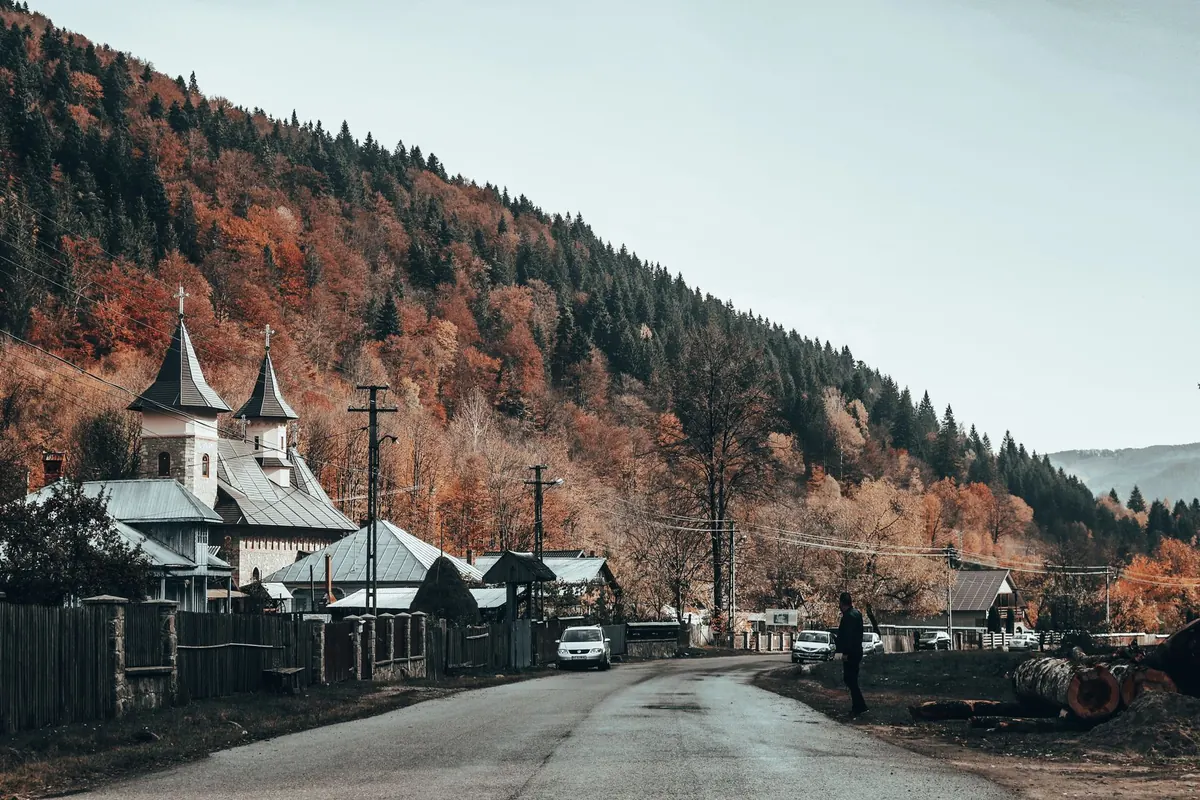
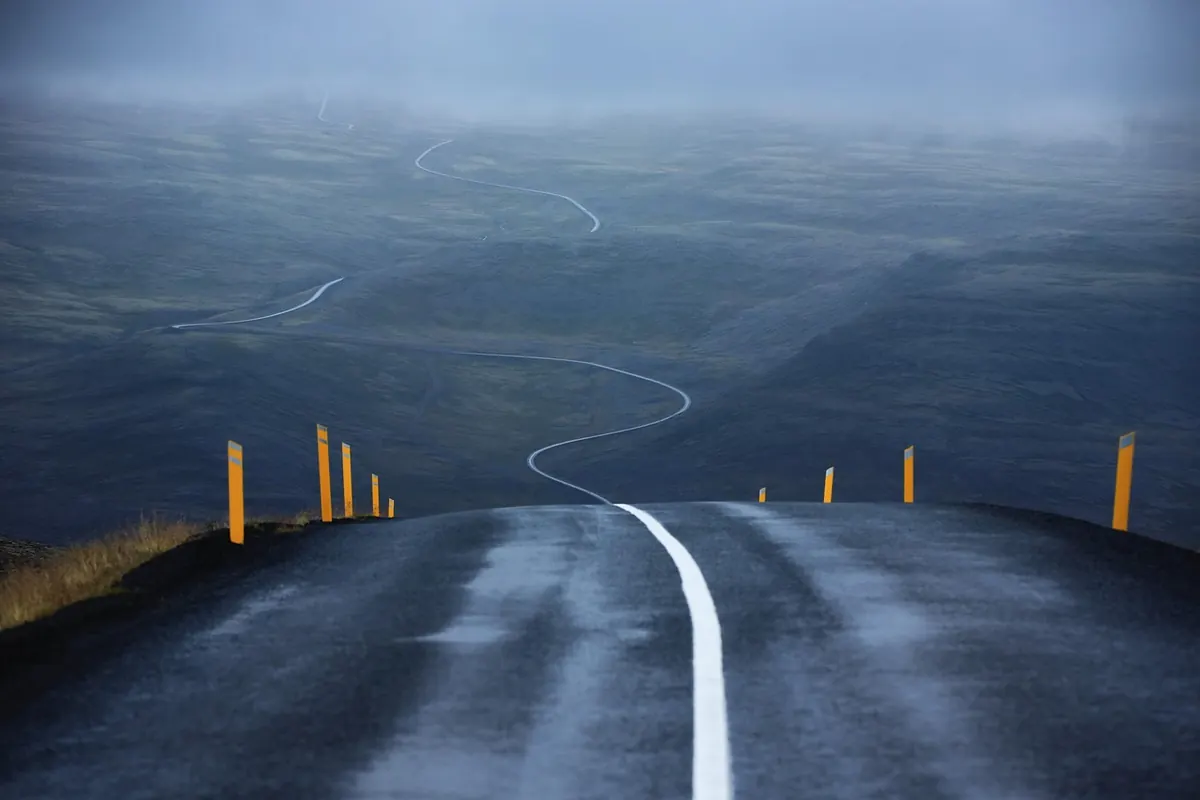
The road we were pushed onto was not a disaster. It was a two-lane road that climbed slowly through hazel groves and small farms, and it added roughly forty kilometres to the day. The phone wanted me to turn around at the next interchange, which would have cost us another twenty-five minutes and put us back on the same motorway, behind the same trucks, in the same mood.
I did something I would not have done a year earlier. I turned the routing off and kept going.
That decision came from a small piece of arithmetic rather than from romance. We had budgeted ninety minutes of slack for the whole day, and we had already used most of it standing in a queue at a petrol station where the card reader refused two cards before accepting a third. The remaining slack would not have covered the loop back. It would have covered the road ahead. So we took the road ahead, stopped at the first bar we passed, and called the place we were staying to say we would be late.
The woman who answered did not sound surprised. She said the room would be there whenever we arrived, and that if we were coming over the pass we should stop at the village with the war memorial in the square, because the light would be good. She was right about the light.
What the Wrong Turn Actually Cost
I want to be honest about the bill, because detour stories tend to skip it.
- Forty extra kilometres of fuel, which on a small hire car is a modest amount of money and not nothing.
- About two and a half hours of the day, including the stop we ended up being glad we made.
- One phone call to the accommodation, and one to a restaurant to move a reservation.
- A certain amount of low-grade tension in the car for the first twenty minutes.
That last item is the one worth thinking about. The tension did not come from being lost. Being lost is a navigational problem with obvious solutions. It came from the feeling that the day was now off-script and that the script had been the point. We had planned so carefully that the plan had become the thing we were protecting, rather than the trip it was supposed to serve.
The Hour Nobody Had Planned
The village sat on a shoulder of the road with a square, a fountain that was not running, and a bar with four tables outside. We ordered two coffees and a plate of something the man behind the counter described with a gesture rather than a name. It turned out to be bread, oil, tomatoes and salt, and it was better than the meal we had been rushing towards.
While we ate, a man in a work jacket pointed at our map, which was spread across the table because the phone had lost signal in the valley. He traced a route over the pass with a finger, said the word tornante several times, and made a looping motion with his hand to indicate the hairpins. Then he drew a small circle around a spot we had not noticed at all and tapped it twice. We went there. It was a bridge, older than anything we had seen that week, with a single arch over a green river.
None of this was on the itinerary. All of it is what we talked about on the drive home.
Tight Plans Fail Quietly
A packed itinerary does not usually collapse dramatically. It erodes. One late start, one closed road, one long lunch, and suddenly you are driving past things at speed because you are due somewhere. The erosion is invisible at the planning stage, because each individual item looks reasonable on its own. Nine o'clock here, eleven there, lunch at one, a museum at three. String enough reasonable items together and you have built a day with no tolerance in it.
What makes it worse is that the pressure rarely produces a better trip. A schedule that assumes everything goes right is a schedule that spends the whole day being slightly behind, and slight lateness is exhausting in a way that real lateness is not. It never quite becomes a crisis, so you never quite relax.
The plan should be the frame, not the picture. You need enough structure to know which direction to point the car, and enough room to stop when something turns out to be worth stopping for.
How I Leave Room Now
I still plan. Skipping planning entirely is just trading one kind of stress for another, and I have done that too. The difference is that I now build in space deliberately, in specific ways.
- Fix anchors, not hours. I commit to a handful of things that genuinely matter: a place to sleep, a road I want to drive, one meal worth arranging. Everything between those anchors stays loose.
- Keep one unclaimed block per day. Two or three hours with nothing scheduled. If it fills up, fine. If it does not, that is also fine, and it usually fills itself.
- Do not book every night in advance. On a trip of more than four days, I leave a night or two open so a place can keep me longer than planned. Outside high season this is easy; in high season, I book but choose places with forgiving cancellation terms, and I read those terms properly.
- Write down a plan B on the same page as plan A. If the pass is closed or the town is heaving, where do we go instead? Deciding that in advance takes two minutes. Deciding it at the roadside takes forty.
- Give the passenger a job. On this trip, the navigator was also the person in charge of the schedule, and neither of us had agreed on who was watching for junctions. Now the person in the left seat reads the next two exits aloud. It sounds fussy. It works.
- Carry a paper map of the region. Not for nostalgia. For the valley where the signal dies and the phone becomes a very expensive torch.
Room Is Not the Same as Vague
There is a version of flexibility that is really just disorganisation, and it is not what I am recommending. Knowing where you will sleep and roughly which road you will take is not the enemy of spontaneity. It is what makes spontaneity possible, because you are not spending the unplanned hour working out whether you have anywhere to be.
The Rule I Use on Every Trip Now
Before I finalise any day of driving, I ask one question: if we lose an hour, what breaks? If the answer is a reservation I cannot move, a ferry I cannot miss, or a border crossing with a hard closing time, that day needs more buffer than the others, and I treat it as a day to be driven efficiently rather than enjoyed slowly.
If nothing breaks, the day has room, and room is where the good parts tend to happen. The wrong turn on that road in the hills cost us a reservation and forty kilometres of fuel. It gave us a plate of bread and tomatoes, a bridge over a green river, and a way of travelling that has held up on every trip since.
Leave the gap in the plan. You will not regret the hour you did not schedule.
Photo: TobiasBrunner / Pixabay